
Filed Under:
Manufacturing
Published on
September 16, 2026
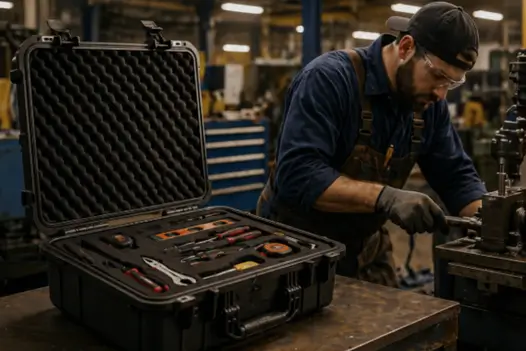
When a project requires a custom carrying case, many procurement teams assume the fastest path is sourcing individual components from multiple suppliers. One vendor handles the case shell, another produces foam inserts, a third manages branding, and yet another coordinates logistics.
While this approach may seem flexible, it often creates unnecessary complexity, longer timelines, quality inconsistencies, and higher overall costs. For companies manufacturing equipment, tools, electronics, medical devices, military products, and industrial systems, partnering with a single end-to-end custom case manufacturer offers significant advantages throughout the product lifecycle.
This article explores why consolidated case manufacturing has become the preferred solution for organizations seeking efficiency, consistency, and scalability.
A protective case is rarely just a box. Most projects require multiple manufacturing disciplines working together, including:
When these functions are spread across multiple suppliers, each handoff introduces additional risk. Common challenges include:
The more suppliers involved, the more opportunities there are for errors, delays, and unexpected expenses.
Working with an integrated custom case manufacturer simplifies the entire process by bringing design, production, and fulfillment under one roof. Rather than managing multiple vendors, customers work with a dedicated team that oversees every stage of development. This streamlined approach provides greater visibility, accountability, and efficiency from concept to delivery.
One of the most common issues in multi-vendor projects occurs when a case design is created independently from the manufacturing process. A design may look excellent on paper but become difficult, expensive, or impossible to manufacture efficiently. When engineering and production teams work together from the beginning, designs are optimized for both performance and manufacturability.
This allows for:
The result is a custom case solution that performs as intended while remaining scalable for production.
Protective performance depends on more than the exterior shell. Custom foam inserts play a critical role in preventing damage from shock, vibration, and impact during transportation and storage. When foam fabrication is managed by a separate supplier, fitment issues can arise due to measurement discrepancies or communication gaps. An integrated manufacturing process eliminates these challenges. Using CAD models, physical samples, and equipment specifications, foam inserts can be engineered specifically for the case and the product it protects.
Benefits include:
For industries where equipment reliability is critical, interior protection must be designed as part of the complete solution rather than as an afterthought.

Quality control becomes increasingly difficult when multiple suppliers contribute to a single finished product. Even small inconsistencies in materials, dimensions, or assembly processes can affect performance.
An end-to-end manufacturing partner maintains quality standards throughout the entire production process, including:
This integrated oversight helps ensure the final product meets specifications before shipment.
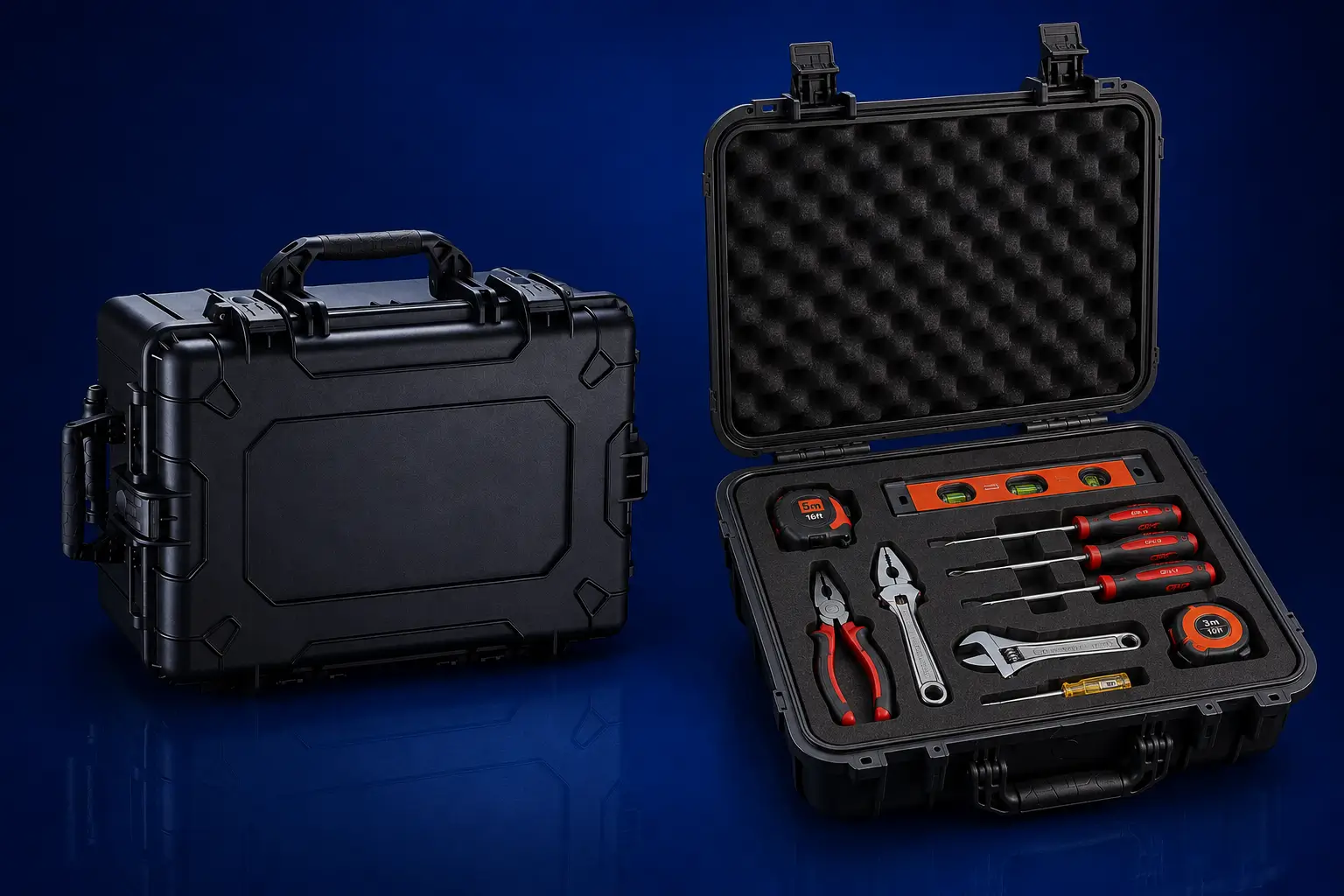
As production volumes increase, sourcing challenges often become more complex. Manufacturers may require domestic production, international manufacturing, or a combination of both depending on project requirements. A custom case manufacturer with a global footprint can provide greater flexibility for:
This allows organizations to adapt production strategies without rebuilding their supplier network.
Production is only one part of the equation. Many organizations also need inventory management, fulfillment support, and global shipping coordination. When logistics are handled separately, additional transportation costs and delays can occur.
Integrated warehousing and logistics services help streamline distribution through:
This creates a more efficient supply chain while reducing administrative overhead.
Integrated case manufacturing is particularly valuable for industries that require consistent quality, regulatory compliance, and reliable product protection. Common applications include:
For these industries, product protection directly impacts customer satisfaction, operational performance, and brand reputation.
Not all case manufacturers offer the same capabilities. When evaluating suppliers, consider whether they provide:
A partner capable of managing the complete process can help reduce risk while accelerating project timelines.
The most successful custom case programs are built on collaboration, efficiency, and accountability. By consolidating design, manufacturing, foam fabrication, logistics, and fulfillment with a single partner, organizations gain greater control over quality, timelines, and costs. Whether you need injection molded hard cases, soft sewn carrying solutions, EVA cases, cases, aluminum cases, or custom foam interiors, working with a fully integrated manufacturer helps ensure every component performs exactly as intended.
Ready to bring your project to life? Contact Royal Case Company to discuss your custom case requirements and discover how a complete end-to-end manufacturing solution can simplify your next program.


At Royal Case, we are committed to meeting your compliance needs. To ensure accuracy and satisfaction, all compliance requirements must be communicated to us before an order is placed. We can manufacture to nearly any standard, but those standards must be stated in writing prior to production. Please note that compliance not disclosed in advance cannot be guaranteed.


